Cuban Cigar Rolling: A Centuries-Old Handmade Art
Walk into any cigar factory in Havana, and you will see a group of craftsmen known as torcedor sitting at workstations, their nimble hands twisting and turning tobacco leaves. Every Cuban cigar, from filler blending to final rolling, is entirely handmade, a tradition that has endured for hundreds of years.
Filler Blends: The Core of Flavor
Prior to rolling, the most critical task is blending the filler tobacco (Ligero / Seco / Volado). The filler of Cuban cigars is generally a mixture of three types of tobacco harvested from different plant sections and growing years:
- Ligero: Taken from the top of tobacco plants, exposed to the most sunlight with thick leaves, delivering rich core flavors.
- Seco: Sourced from the middle of plants, balancing the boldness of Ligero and bringing delicate aromatic layers.
- Volado: Grown at the bottom of plants or shaded areas, offering superior combustion to maintain steady burn.
The blending ratios are top trade secrets of each cigar brand, known only to a small number of master craftsmen.
Wrapper Selection: The Face of a Cigar
The wrapper is the outermost leaf of a cigar and the first part to touch your palate during smoking. Cuban wrapper leaves demand uniform color, smooth surfaces and fine veins. Workers grade and screen leaves based on shade, thickness and oiliness, with premium wrappers accounting for only a tiny fraction of the total harvest.
Rolling Technique: Mastery Refined Down to Millimeters
When rolling, craftsmen first secure the filler inside a binder leaf to set its shape, then wrap it tightly with the wrapper. Even pressure is essential throughout the process; an overly tight roll disrupts combustion, while a loose roll creates a flimsy cigar body. After rolling, cigars are trimmed to standard lengths and visually inspected. Any misshapen or cracked cigars are discarded outright.
Aging: From Harsh Raw Leaf to Mellow Richness
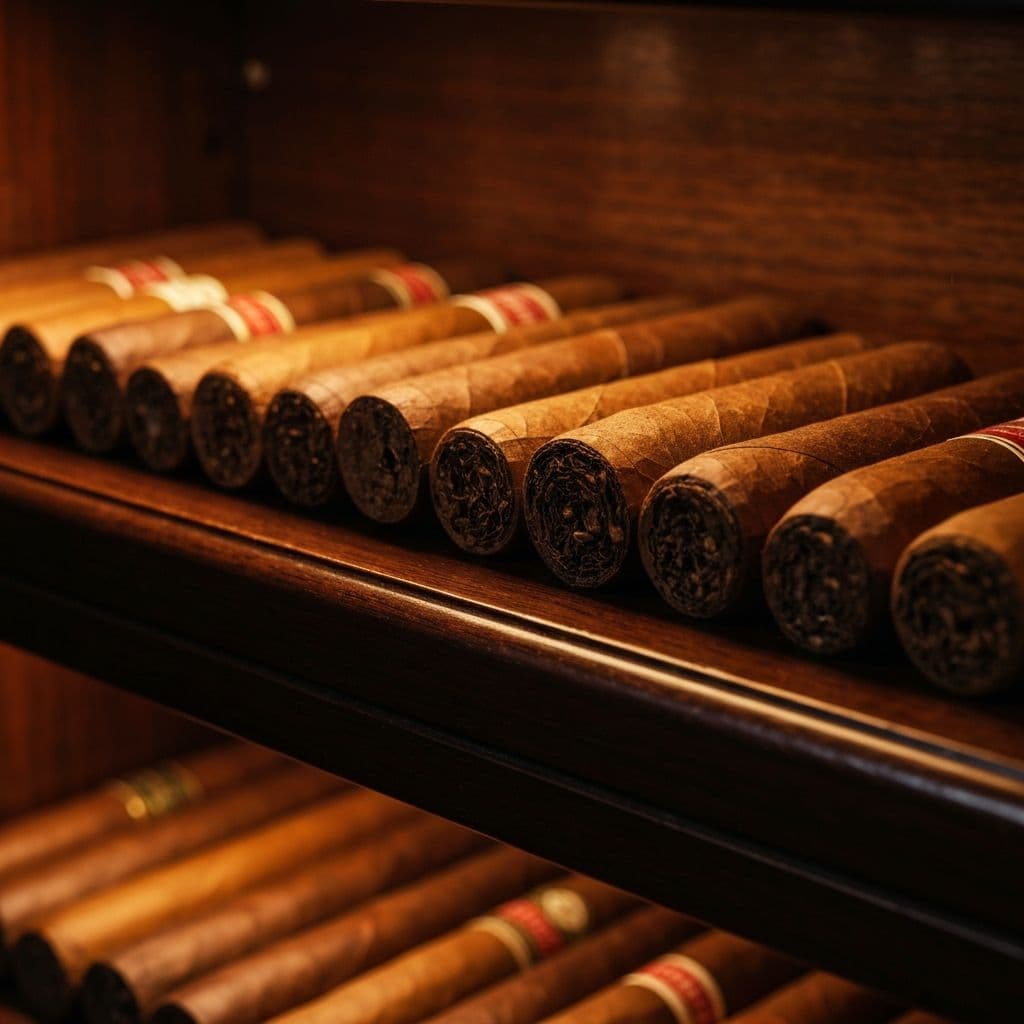
Freshly rolled cigars cannot be sold immediately and must age in a temperature and humidity-controlled environment for a period. Cuban regulations mandate a minimum six-month aging period for machine-made cigars, while handmade cigars typically age for one to three years. Slow microbial fermentation takes place between filler and wrapper during aging, fully integrating all flavors to develop the signature smooth, mellow taste of fine cigars.